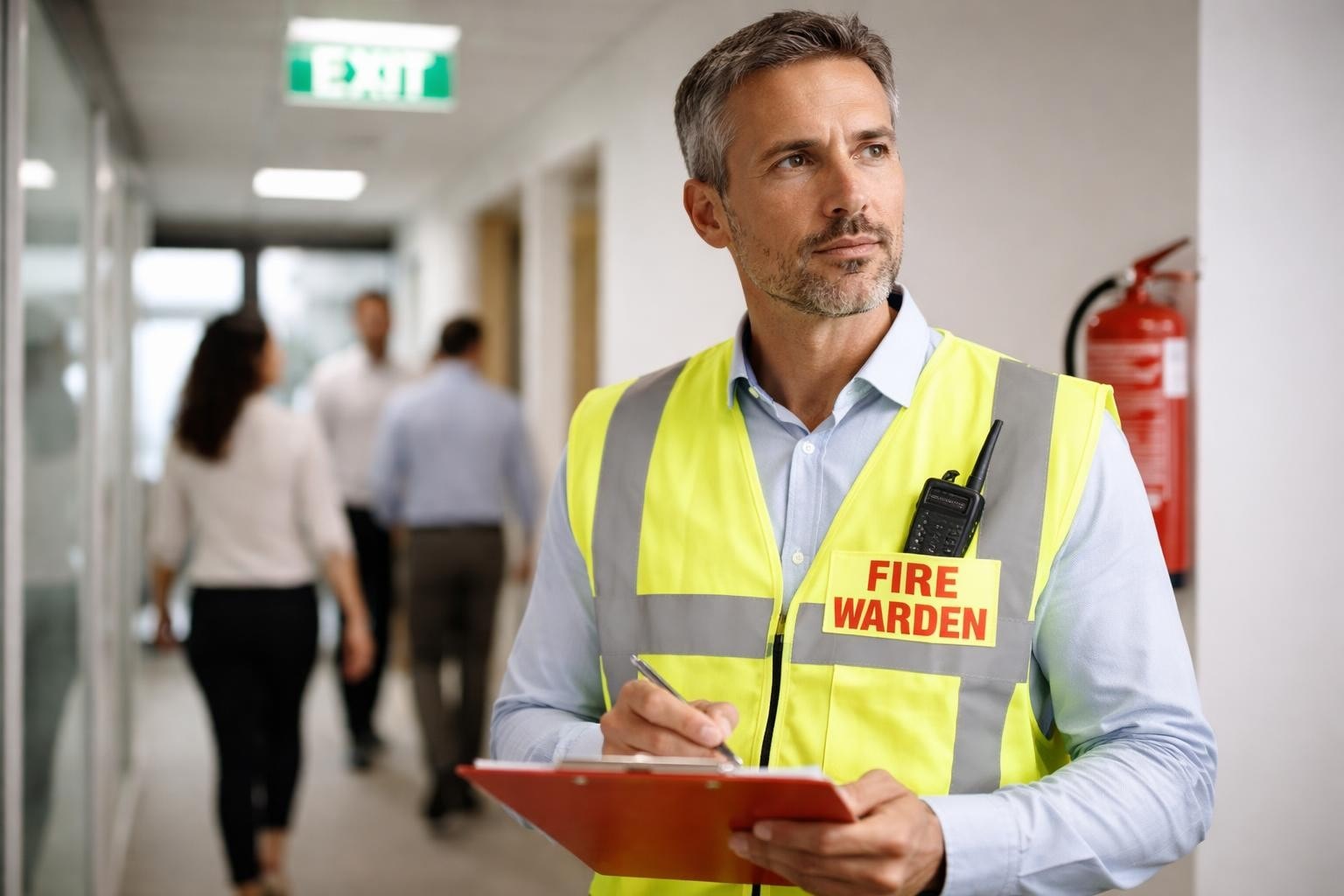
In every workplace across the United Kingdom, designated individuals carry the critical responsibility of protecting lives and property during fire emergencies. Understanding what these appointed safety officers do, how they're trained, and why their presence is legally mandated helps businesses maintain robust fire safety protocols. A fire warden is a specifically trained employee tasked with implementing fire prevention measures, coordinating evacuations, and acting as the liaison between occupants and emergency services during incidents.
The Definition and Core Purpose of Fire Wardens
A fire warden is an individual appointed by the responsible person within an organisation to assist with fire safety management and emergency response procedures. These designated personnel form the frontline defence against fire-related incidents in commercial premises, educational institutions, healthcare facilities, and industrial sites throughout the UK.
The primary purpose extends beyond simply responding to alarms. Fire wardens maintain an ongoing vigilance regarding fire hazards, ensure evacuation routes remain clear, and serve as trained points of contact during drills and actual emergencies. Their appointment fulfils specific obligations under the Regulatory Reform (Fire Safety) Order 2005, which requires adequate arrangements for planning, organisation, control, monitoring, and review of preventive and protective measures.
Legal Framework and Mandatory Requirements
UK fire safety legislation establishes clear expectations for workplace fire safety management. Under current regulations, the responsible person must ensure competent individuals are available to implement fire safety arrangements. Fire wardens typically fulfil this requirement, though the exact number needed depends on premises size, occupancy levels, and risk factors identified through professional fire risk assessments.
Key legislative drivers include:
- Regulatory Reform (Fire Safety) Order 2005 (England and Wales)
- Fire (Scotland) Act 2005
- Fire and Rescue Services (Northern Ireland) Order 2006
- Health and Safety at Work Act 1974
The legislation doesn't prescribe specific fire warden numbers but emphasises adequate provision. Most guidance suggests at least one fire warden per floor or department, with additional wardens for larger or higher-risk areas.
Primary Responsibilities During Normal Operations
Fire warden duties extend well beyond emergency response. During everyday operations, these appointed individuals maintain continuous oversight of fire safety arrangements, ensuring compliance and identifying potential issues before they escalate into emergencies.
Routine Inspection and Monitoring
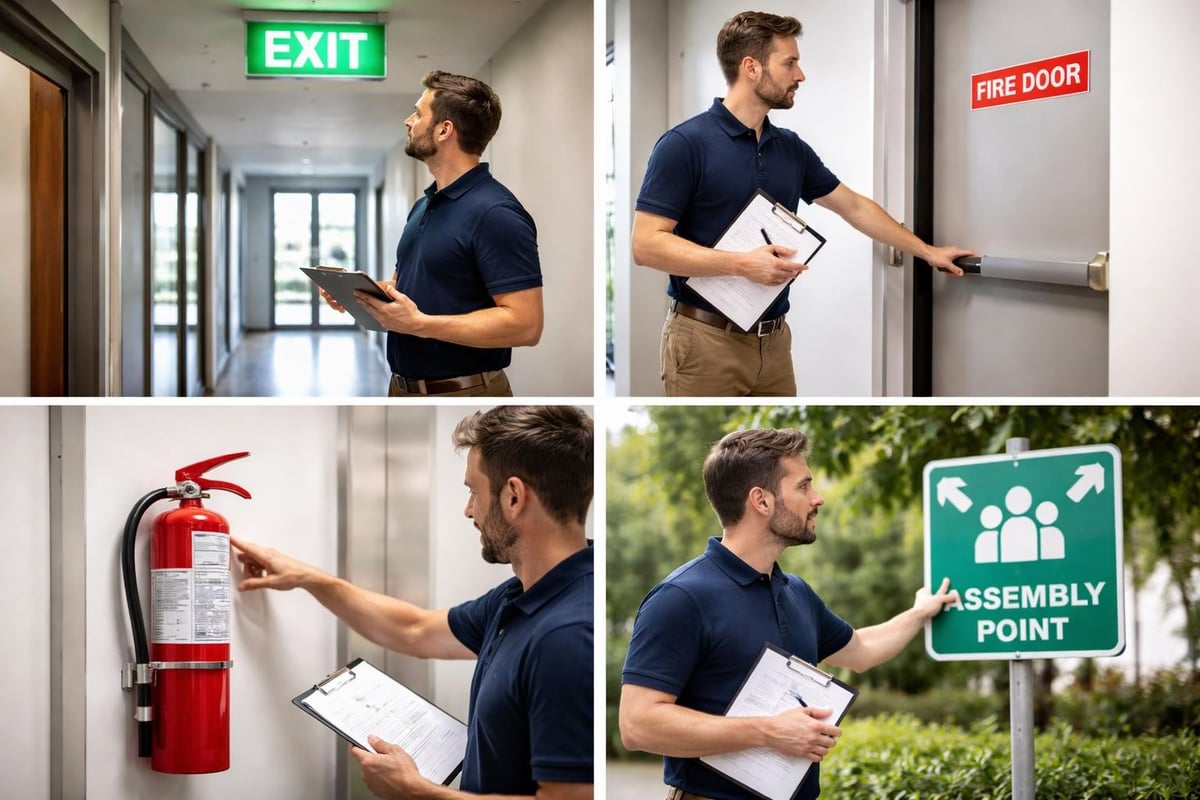
A fire warden is responsible for conducting regular checks of fire safety equipment and infrastructure. This includes visual inspections of fire extinguishers, ensuring fire doors close properly, verifying emergency lighting functionality, and confirming exit routes remain unobstructed. According to guidance from safety professionals, these routine inspections should follow documented schedules aligned with organisational fire safety policies.
| Inspection Area |
Frequency |
Key Checks |
| Fire Exits |
Daily |
Clear, unlocked, signage visible |
| Fire Extinguishers |
Weekly |
Positioned correctly, seals intact, accessible |
| Fire Doors |
Weekly |
Self-closing mechanism, seals intact, no wedges |
| Evacuation Routes |
Daily |
Unobstructed, emergency lighting functional |
| Assembly Points |
Monthly |
Clearly marked, accessible, known to staff |
Coordinating Fire Drills and Evacuations
Regular evacuation drills provide essential practice for both fire wardens and building occupants. A fire warden is tasked with coordinating these exercises, ensuring participation, timing evacuation speeds, and identifying areas for improvement. The University of Bath's fire warden guidance emphasises that effective drill coordination includes briefing participants beforehand, monitoring behaviour during evacuation, and conducting post-drill reviews.
Fire wardens document drill outcomes, recording evacuation times, noting any difficulties encountered, and recommending procedural adjustments. This documentation proves valuable during regulatory inspections and helps demonstrate ongoing commitment to fire safety improvement.
Emergency Response Duties and Protocols
When fire alarms activate or actual incidents occur, fire wardens transition into immediate action mode. Their emergency responsibilities are time-critical and potentially life-saving, requiring calm authority and precise execution of pre-planned procedures.
Initial Response to Fire Alarms
Upon hearing the fire alarm, a fire warden is expected to immediately begin systematic procedures. These typically include:
- Stop normal activities and focus entirely on emergency response
- Don high-visibility identification (if provided) to be easily recognised
- Proceed to assigned search areas following predetermined routes
- Conduct thorough sweeps of all rooms, toilets, storage areas, and concealed spaces
- Direct occupants toward designated escape routes and assembly points
- Close doors behind them to contain potential fire spread
- Report to incident controller at the assembly point with headcount status
The HSE Study Guide highlights that fire wardens should never place themselves in danger. If smoke, heat, or flames prevent area access, they must report this to emergency services rather than attempt heroic entries.
Supporting Vulnerable Individuals
A fire warden is particularly important for assisting individuals with disabilities, mobility limitations, or those unfamiliar with the premises. Personal Emergency Evacuation Plans (PEEPs) typically designate specific fire wardens to assist identified individuals, ensuring nobody gets left behind during evacuations.
This responsibility requires:
- Pre-planning evacuation assistance with the individual concerned
- Knowing locations of evacuation aids (evacuation chairs, refuge points)
- Maintaining communication throughout the evacuation process
- Confirming safe arrival at assembly points
- Reporting immediately if individuals cannot be located
Training Requirements and Competency Development
Effective fire warden performance depends entirely on proper training. A fire warden is only as capable as their preparation allows, making structured training programmes essential for organisational fire safety.
Core Training Components
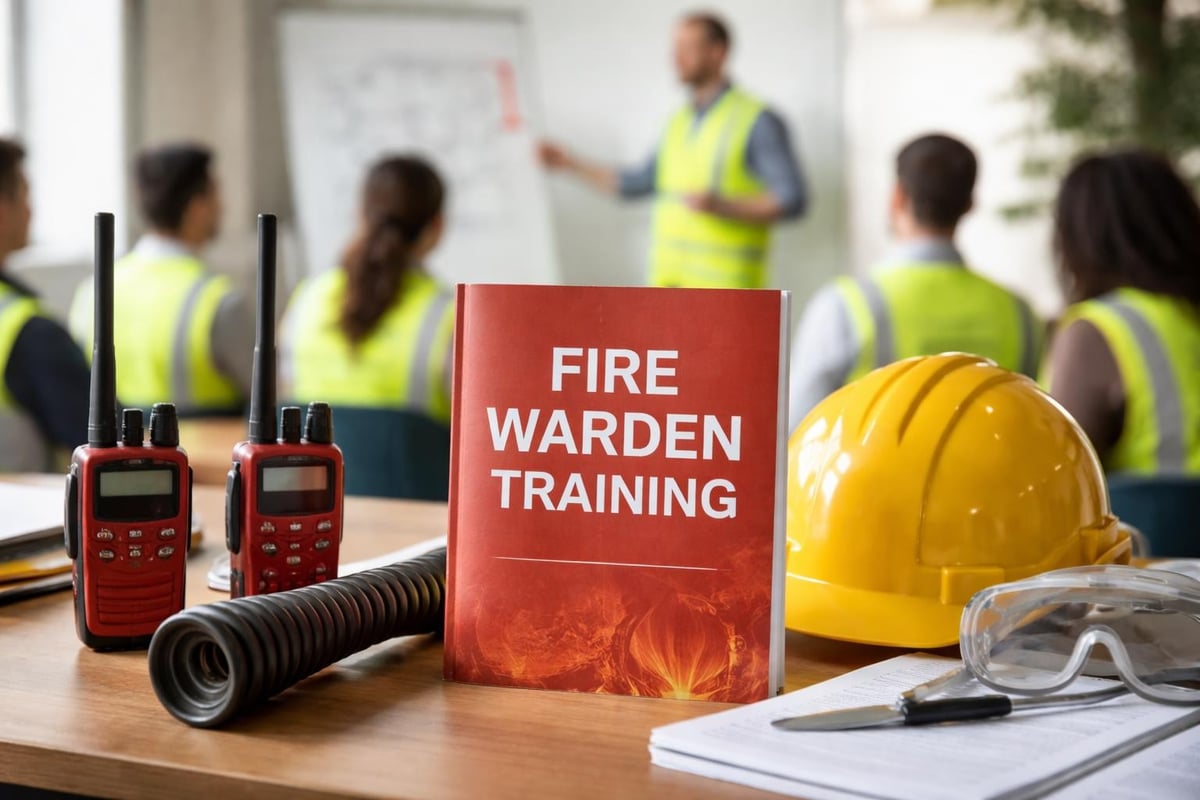
According to Fire Action's overview of fire warden responsibilities, comprehensive fire warden training should cover both theoretical knowledge and practical skills. Most accredited courses include:
- Fire science basics: understanding fire triangle, spread patterns, and smoke behaviour
- Legislative framework: key duties under UK fire safety law
- Risk assessment principles: identifying hazards and evaluating controls
- Emergency procedures: alarm response, evacuation coordination, headcounts
- Equipment operation: proper use of fire extinguishers and other safety devices
- Communication protocols: liaising with emergency services and management
Training typically requires renewal every 12 months, though higher-risk premises may mandate more frequent refresher sessions. The fire safety training provided by specialist firms ensures fire wardens remain current with evolving regulations and best practices.
Practical Skills Development
Beyond classroom-based learning, a fire warden is expected to demonstrate hands-on competency. Practical training sessions should include:
- Live fire extinguisher training using controlled fires
- Evacuation simulations in realistic scenarios
- Disability assistance practice with evacuation equipment
- Communication exercises using radios or phones during mock incidents
- Search technique practice in complex building layouts
| Training Method |
Purpose |
Frequency |
| Classroom Theory |
Legal knowledge, procedures |
Annual minimum |
| Practical Drills |
Hands-on skills, muscle memory |
Quarterly recommended |
| Desktop Exercises |
Decision-making, problem-solving |
Bi-annual |
| Equipment Familiarisation |
Confidence with safety devices |
Annual minimum |
Qualities and Characteristics of Effective Fire Wardens
Not everyone possesses the temperament or capabilities required for fire warden duties. A fire warden is most effective when they combine specific personal attributes with technical knowledge, creating a confident and competent safety presence.
Essential Personal Attributes
Organisations should consider these characteristics when appointing fire wardens:
- Calm under pressure: maintaining composure during stressful situations
- Clear communication: conveying instructions authoritatively yet reassuringly
- Physical capability: able to move quickly through buildings and assist others
- Reliability: consistently present during working hours
- Attention to detail: noticing hazards during routine inspections
- Leadership qualities: naturally commanding respect and cooperation
The DDA Fire article on fire warden responsibilities emphasises that effective fire wardens demonstrate proactive rather than reactive behaviours, identifying and addressing potential issues before they require emergency response.
Building Knowledge and Familiarity
A fire warden is significantly more effective when intimately familiar with their assigned areas. This knowledge encompasses:
- Layout of all rooms, corridors, and concealed spaces
- Location of all fire safety equipment and controls
- Alternative evacuation routes if primary paths become blocked
- Areas where vulnerable individuals typically work or visit
- High-risk zones requiring particular attention
- Building modifications or temporary works affecting fire safety
Regular personnel rotate through fire warden roles in some organisations, whilst others maintain consistent appointments. Both approaches have merits, though consistency often yields deeper building knowledge and procedural familiarity.
Integration with Broader Fire Safety Management
Fire wardens don't operate in isolation. A fire warden is one component within comprehensive fire safety management systems that include multiple roles, procedures, and technical controls working in concert.
Relationship with the Responsible Person
Under UK fire safety law, every premises has a designated responsible person-typically the employer, building owner, or facilities manager. This individual holds ultimate accountability for fire safety compliance but relies on fire wardens to implement practical measures.
The responsible person should:
- Formally appoint sufficient fire wardens with clear written terms of reference
- Provide adequate training and refresher opportunities
- Supply necessary equipment including identification vests, torches, communication devices
- Review fire warden effectiveness through regular performance discussions
- Act on fire warden reports regarding hazards or deficiencies
This relationship ensures fire wardens have appropriate authority and resources whilst maintaining clear accountability structures.
Coordination with Other Safety Roles
Larger organisations often employ multiple specialist safety roles. A fire warden is typically distinct from first aiders, health and safety officers, and security personnel, though individuals sometimes hold multiple appointments. Guardian Safety's guidance notes that effective coordination between these roles prevents duplication whilst ensuring comprehensive coverage.
Common role interactions include:
- First aiders: coordinating casualty care during evacuations
- Security teams: controlling access and providing incident information
- Facilities managers: reporting maintenance requirements
- Health and safety officers: contributing to risk assessments and policy development

Common Challenges and Practical Solutions
Despite comprehensive training and clear procedures, fire wardens encounter various challenges during both routine duties and emergency situations. A fire warden is most effective when organisations anticipate these difficulties and implement practical solutions.
Staff Turnover and Appointment Gaps
Fire warden appointments become problematic when trained individuals leave the organisation or change roles. Businesses should maintain at least 25% more trained fire wardens than minimum requirements, ensuring adequate coverage during absences, holidays, and transition periods.
Succession planning strategies:
- Train multiple personnel for each designated area
- Maintain waiting lists of interested staff
- Include fire warden appointments in job descriptions where appropriate
- Conduct skills audits quarterly to identify gaps
- Fast-track replacement training when departures occur
Maintaining Engagement During Quiet Periods
When months or years pass without actual fire incidents, fire warden vigilance can wane. Regular engagement activities help maintain focus and readiness.
Effective engagement techniques include varying drill scenarios, rotating fire warden responsibilities, recognising outstanding performance, sharing incident case studies from other organisations, and involving fire wardens in policy development discussions.
Balancing Fire Safety with Operational Demands
A fire warden is often a full-time employee with primary job responsibilities unrelated to fire safety. During busy operational periods, fire safety duties may receive insufficient attention. Senior management must explicitly prioritise fire safety activities and protect fire wardens' time for inspections, drills, and training.
This requires scheduling fire safety tasks during working hours, including fire warden duties in performance objectives, providing backfill support during major fire safety activities, and recognising that fire safety is a business-critical function deserving appropriate resource allocation.
Fire Warden Duties Across Different Premises Types
The specific responsibilities and challenges facing fire wardens vary considerably depending on premises characteristics. A fire warden is required to adapt their approach based on occupancy patterns, building complexity, and risk profiles.
Office Environments
Office fire wardens typically manage familiar occupants following predictable patterns. Challenges include complacency due to low perceived risk, blocked fire exits from storage overflow, and difficulties evacuating during peak lunch periods when many staff are absent.
Best practices for office fire wardens include maintaining detailed floor plans showing warden search zones, establishing deputy wardens for each area, coordinating with building management in multi-tenant premises, and conducting quarterly drills at varying times to test different scenarios.
Industrial and Warehouse Settings
Manufacturing and logistics environments present heightened risks from processes, materials, and equipment. Fire wardens in these settings must understand specific hazards, shutdown procedures for dangerous processes, locations of specialist firefighting equipment, and vehicle movement patterns affecting evacuations.
Educational Institutions
Schools, colleges, and universities require fire wardens to manage large numbers of young or vulnerable individuals unfamiliar with buildings. This demands additional fire wardens during peak occupancy, coordination with teaching staff to ensure class evacuations, special provisions for early years or special educational needs students, and visitor management procedures during open days or events.
Healthcare Facilities
Hospitals, care homes, and medical centres present unique fire safety challenges. A fire warden is essential but must work within progressive horizontal evacuation strategies rather than total building evacuation. This involves compartmentation understanding, patient movement protocols, coordination with clinical staff priorities, and specialist equipment for moving bed-bound individuals.
Record Keeping and Documentation Requirements
Effective fire safety management requires meticulous documentation. A fire warden is responsible for maintaining various records demonstrating ongoing compliance and providing evidence of systematic safety management.
Essential Fire Warden Records
| Record Type |
Content |
Retention Period |
| Training Certificates |
Course completion, dates, provider |
Minimum 3 years |
| Inspection Logs |
Daily/weekly checks, findings, actions |
Minimum 2 years |
| Drill Reports |
Evacuation times, issues, improvements |
Minimum 3 years |
| Incident Reports |
Alarm activations, false alarms, actual fires |
Minimum 5 years |
| Equipment Checks |
Extinguisher positions, door tests, signage |
Minimum 2 years |
These records prove invaluable during regulatory inspections, insurance assessments, and legal proceedings following incidents. Digital record systems increasingly replace paper logs, offering advantages in searchability, backup security, and audit trail transparency.
Integration with Fire Risk Assessment Documentation
Fire warden activities directly support findings and recommendations within formal fire risk assessments. When qualified assessors identify deficiencies or required improvements, fire wardens often implement corrective actions and monitor ongoing compliance.
This integration ensures theoretical risk assessment translates into practical safety improvements, with fire wardens providing feedback on implementation challenges and real-world effectiveness of proposed measures.
The Business Case for Competent Fire Wardens
Beyond legal compliance, investing in properly trained fire wardens delivers tangible business benefits. A fire warden is not merely a regulatory requirement but a valuable asset protecting business continuity, reputation, and financial stability.
Insurance and Liability Considerations
Insurance providers increasingly scrutinise fire safety arrangements when underwriting premises or assessing claims. Demonstrable investment in fire warden training and systematic safety management can reduce premiums, expedite claims processing following incidents, and strengthen defences against negligence allegations.
Conversely, inadequate fire warden provision may invalidate coverage, increase excess payments, or result in cover withdrawal for high-risk premises. The relatively modest investment in proper fire warden programmes offers substantial protection against these financial exposures.
Business Continuity and Operational Resilience
Fire incidents cause devastating business interruptions extending far beyond immediate property damage. Effective fire wardens minimise incident severity through early detection, proper response, and coordinated evacuations. This limitation of damage extent and duration directly protects revenue streams, customer relationships, and market position.
Research from business continuity specialists indicates that organisations with robust fire safety programmes, including competent fire wardens, recover from fire incidents 40% faster than those with minimal safety provisions.
Understanding what a fire warden is and ensuring your organisation has properly trained, competent individuals in these critical roles forms the foundation of effective workplace fire safety management. Fire wardens bridge the gap between written policies and practical emergency response, maintaining daily vigilance whilst standing ready to protect lives during incidents. Firesurv Group Ltd provides comprehensive fire safety training alongside expert assessments and compliance support throughout the United Kingdom, helping businesses across all sectors develop robust fire safety programmes that protect people, property, and business continuity.