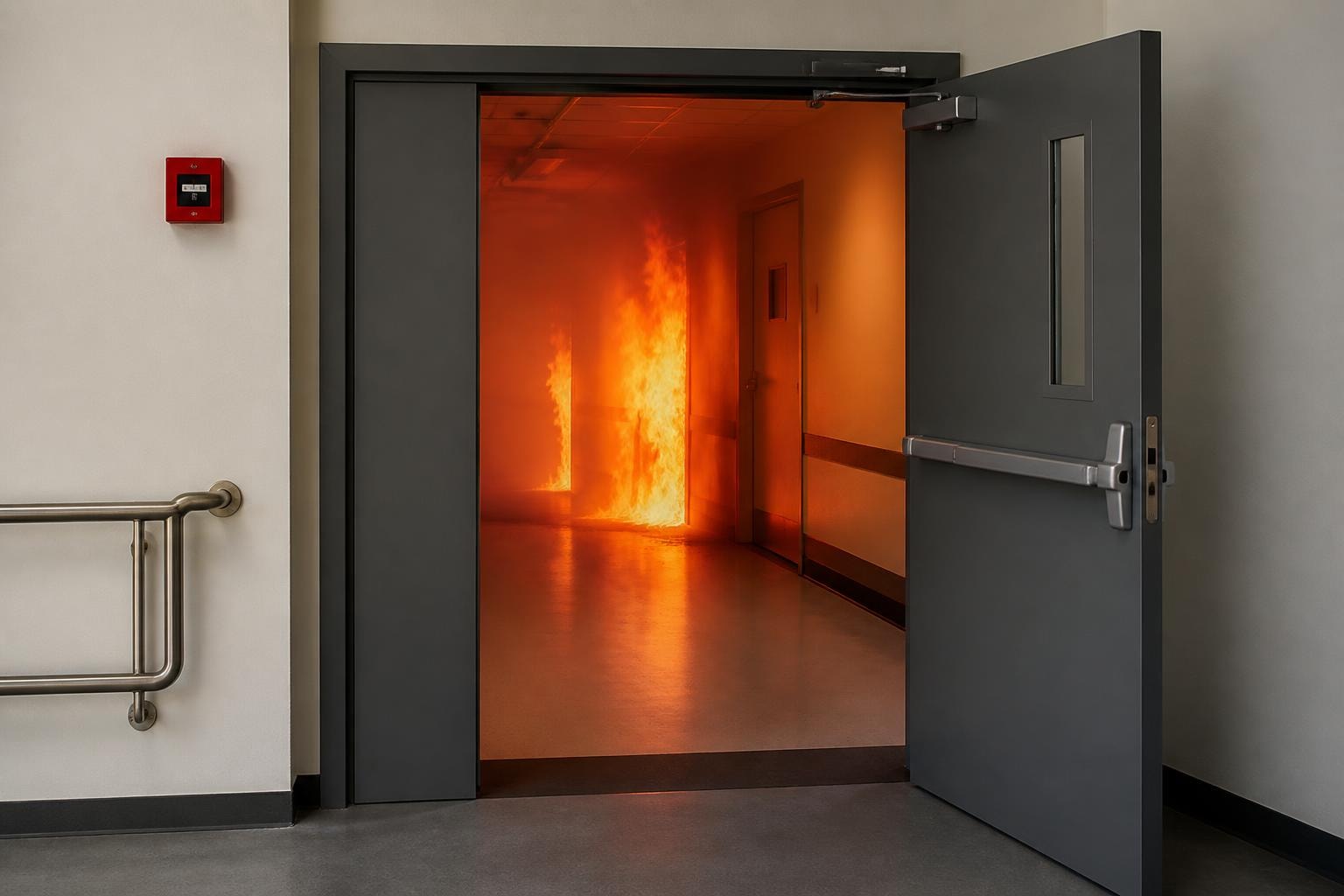
Fire doors represent one of the most critical passive fire protection elements in any building, yet they remain amongst the most frequently misunderstood and poorly maintained safety features. Understanding fire regulations fire doors must comply with is essential for anyone responsible for building safety, whether you manage commercial premises, residential blocks, or industrial facilities. These regulations exist not merely as bureaucratic requirements but as life-saving measures proven through decades of fire safety research and, tragically, through lessons learned from devastating incidents where inadequate fire door compliance contributed to loss of life.
Understanding the Legal Framework for Fire Door Compliance
The regulatory landscape governing fire doors in the United Kingdom centres primarily on the Regulatory Reform (Fire Safety) Order 2005, which places explicit duties on responsible persons to ensure appropriate fire safety measures are implemented and maintained. This legislation requires that all fire doors perform their intended function: to restrict fire and smoke spread whilst protecting escape routes for the duration specified in their fire resistance rating.
Fire regulations fire doors must meet extend beyond simple installation requirements. The responsible person-typically the building owner, employer, or managing agent-must ensure doors are correctly specified for their location, properly installed by competent individuals, and maintained in working order throughout their operational life. This comprehensive approach recognises that a fire door is only effective when every component functions correctly, from the door leaf and frame to the intumescent seals and self-closing mechanisms.
Key Regulatory Documents and Standards
British Standards provide the technical specifications that underpin fire regulations fire doors compliance. BS 9999 offers guidance on fire safety in the design, management, and use of buildings, whilst BS 476 series establishes testing methods for fire resistance. Meanwhile, BS 8214 specifically addresses fire door assemblies, providing detailed requirements for installation and ongoing maintenance.
The Building Regulations Approved Document B sets out functional requirements for fire safety in building design and construction. It specifies where fire doors are required, what fire resistance ratings they must achieve, and how they integrate into the broader compartmentation strategy. Understanding these documents is crucial for anyone involved in fire risk assessments or building compliance activities.
Specification and Installation Requirements
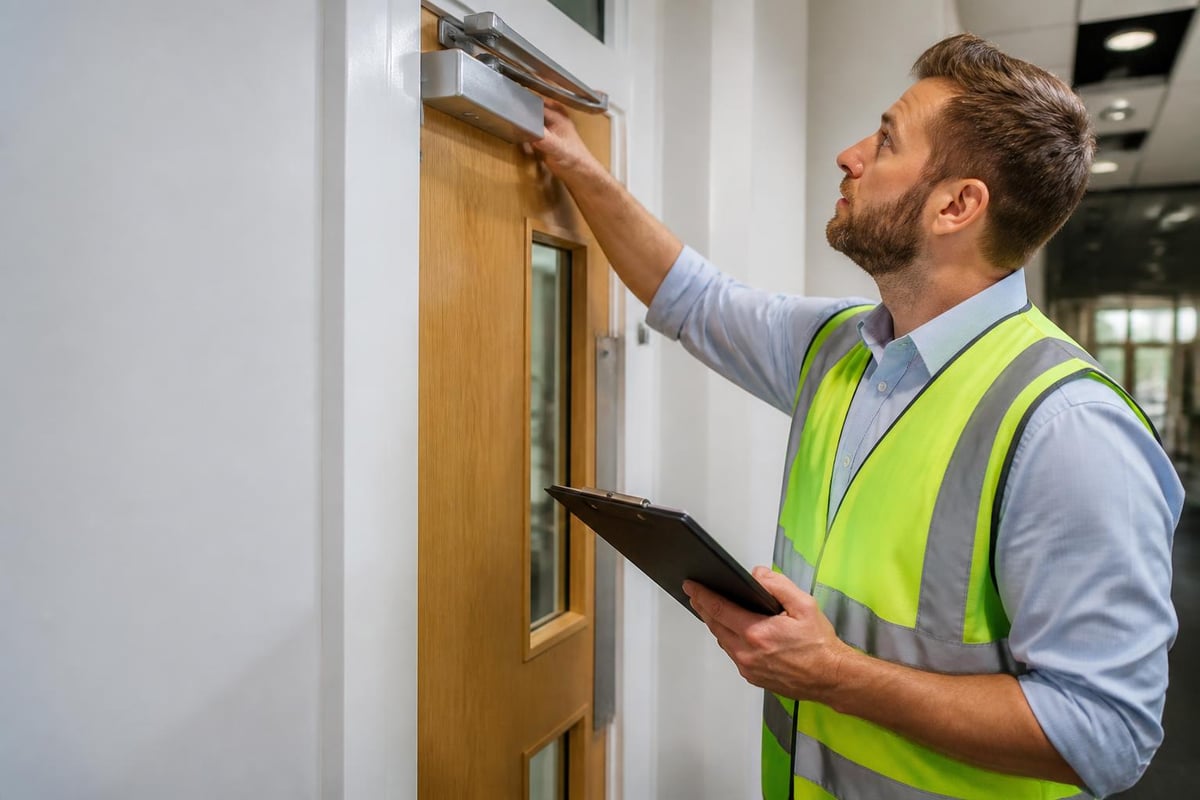
Proper specification begins with understanding the fire resistance rating required for each location. Fire doors are classified by their ability to withstand fire for specified periods, typically 30 minutes (FD30) or 60 minutes (FD60), though other ratings exist for specialist applications. The suffix 'S' indicates additional smoke control properties, making FD30S and FD60S doors suitable for protecting escape routes where smoke containment is critical.
Installation quality determines whether a fire door will perform as intended during an emergency. Even a certified door will fail if installation does not follow manufacturer instructions and relevant fire-rated door installation requirements. Gaps around the frame must not exceed 4mm, intumescent strips must be correctly positioned, and all hardware must be certificated for use with that specific door assembly.
Critical Installation Components
Every fire door assembly consists of multiple interdependent components, and fire regulations fire doors must satisfy require each element to be correctly specified and fitted:
- Door leaf and frame: Must be certificated as tested together, with the door leaf manufactured to precise tolerances
- Intumescent seals: Expand when exposed to heat to seal gaps and prevent smoke passage
- Self-closing devices: Ensure the door returns to its closed position after use, typically using overhead closers or rising butt hinges
- Latching mechanisms: Hold the door securely closed against the frame, preventing premature failure
- Hinges: Must be steel or stainless steel, typically three per door leaf for domestic applications
- Glazing: Any vision panels must use fire-resistant glass appropriate to the door's rating
Professional Fire Door Installation ensures all these components work together as a tested assembly, maintaining the integrity that certification testing demonstrated. Installing non-certificated hardware or mixing components from different manufacturers can void the door's fire resistance rating, creating liability issues and genuine safety risks.
Inspection and Maintenance Obligations
Fire regulations fire doors compliance extends throughout the door's operational life, requiring systematic inspection and maintenance programmes. The responsible person must establish appropriate checking frequencies based on usage levels, door locations, and risk profile. High-traffic doors in commercial premises typically require more frequent attention than doors in low-use areas.
Inspection Frequencies and Scope
Industry guidance recommends different inspection levels at varying intervals:
| Inspection Type |
Frequency |
Scope |
| Basic visual checks |
Weekly or monthly |
Verify door closes fully, check for obvious damage, ensure nothing obstructs closure |
| Detailed inspections |
Six-monthly |
Examine all components, test self-closers, check seals and gaps, verify signage remains present |
| Comprehensive surveys |
Annually |
Full assessment by competent person, documented findings, prioritised remediation schedule |
During inspections, particular attention should focus on common failure points. Door frames often become damaged through impact from trolleys or equipment, creating gaps that compromise fire resistance. Self-closing mechanisms deteriorate over time, resulting in doors that fail to latch properly. Intumescent seals become damaged or painted over, preventing them from expanding effectively during fire exposure.
Professional surveys provide documented evidence of compliance, which is essential both for regulatory purposes and for demonstrating due diligence. Fire door inspection services typically produce detailed reports categorising defects by severity, enabling responsible persons to prioritise remediation based on risk levels.
Common Compliance Failures and Their Consequences
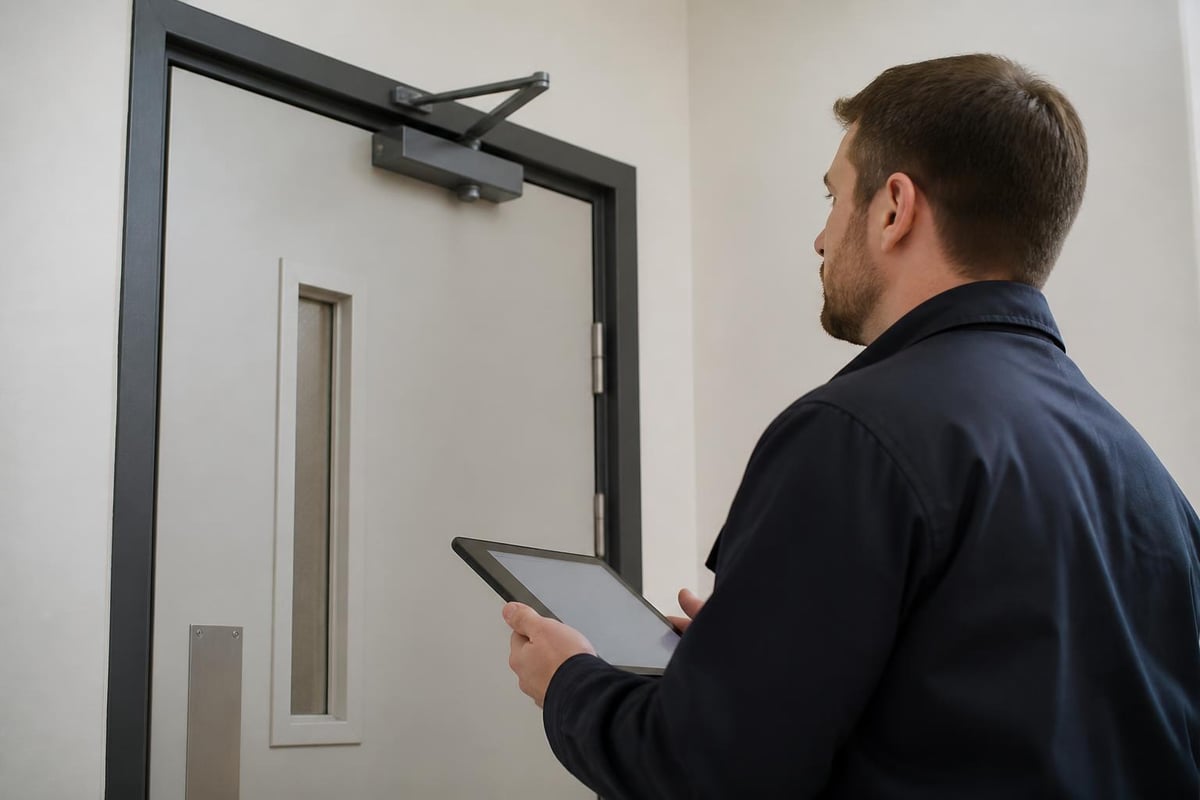
Despite clear regulatory requirements, fire door compliance failures remain widespread across UK buildings. Understanding these common defects helps responsible persons identify issues before they compromise safety during an actual fire emergency.
Frequently Encountered Defects
Wedging or propping open represents the most prevalent fire door violation. While doors may be wedged open for convenience-to improve airflow, facilitate movement, or reduce noise-this practice entirely negates their protective function. Where doors genuinely need to remain open during normal operations, fire regulations fire doors standards permit the use of electromagnetic hold-open devices linked to the fire alarm system, which release upon alarm activation.
Inappropriate modifications frequently undermine door performance. Drilling holes for cables or installing letterboxes, notice boards, or unapproved hardware can breach compartmentation and void certification. Similarly, painting over intumescent seals prevents them from expanding correctly, whilst covering certification labels makes it impossible to verify the door's rating.
Component replacement with non-certificated items occurs when building managers replace failed closers, hinges, or locks without ensuring the replacements are certificated for use with that specific door assembly. Each component must be tested and approved as part of the complete assembly, as specified by proper fire door installation guidance.
Damaged or missing seals significantly reduce smoke containment capability. Intumescent strips and smoke seals deteriorate through wear, impact, or chemical exposure. Once compromised, they must be replaced with manufacturer-approved equivalents to maintain performance.
Enforcement and Penalties
Local authority fire and rescue services hold enforcement powers under the Regulatory Reform (Fire Safety) Order 2005. Following inspections that identify fire safety deficiencies, they can issue enforcement notices requiring remediation within specified timeframes. Serious breaches may result in prohibition notices, preventing building use until defects are rectified.
Failure to comply with fire regulations fire doors requirements can lead to prosecution, with unlimited fines for the most serious cases. Following the Grenfell Tower tragedy, enforcement activity has intensified considerably, with authorities taking a more robust approach to building safety non-compliance. Beyond financial penalties, directors and officers can face personal liability, and corporate manslaughter charges may apply where serious failings contribute to deaths.
Documentation and Record-Keeping Requirements
Demonstrating ongoing compliance requires comprehensive documentation systems. Responsible persons must maintain records proving they have identified fire safety risks, implemented appropriate measures, and maintained those measures effectively. For fire doors, this documentation ecosystem should include several key elements.
Essential Documentation Components
Installation certificates provide evidence that doors were installed by competent persons following manufacturer instructions and relevant standards. These should include details of the door specification, its fire resistance rating, and confirmation that all components are certificated for use together. Without this documentation, determining the door's intended performance becomes problematic.
Inspection records create an audit trail demonstrating regular checking and maintenance. These should detail inspection dates, findings, defects identified, and remedial actions taken. Digital systems increasingly replace paper-based logging, offering advantages for tracking patterns, scheduling reinspections, and generating compliance reports.
Manufacturer information must be retained, including installation instructions, maintenance requirements, and certification details. This information proves essential when replacing components or verifying that modifications remain compliant with original specifications.
Training records demonstrate that staff understand fire door importance and their roles in maintaining compliance. This is particularly relevant in settings where doors are regularly used, as user behaviour significantly impacts door condition and performance.
Fire regulations fire doors compliance documentation serves multiple purposes beyond simply satisfying inspectors. It provides evidence for insurance purposes, supports legal defence if accidents occur, and creates organisational knowledge that persists despite staff turnover. Professional compliance companies maintain robust documentation systems as standard practice, ensuring clients can demonstrate due diligence at any point.
Fire Door Certification and Testing Standards
Understanding certification marks and testing standards helps responsible persons verify that doors meet regulatory requirements. In the UK, fire doors should carry certification from recognised third-party certification bodies such as BM TRADA, Warringtonfire, or Exova Warringtonfire. These marks confirm the door has undergone rigorous testing and continues to be manufactured under quality-controlled conditions.
Interpreting Certification Marks
Fire door labels typically display several pieces of critical information:
- Certification body logo: Identifies which organisation has certificated the product
- Fire resistance rating: Indicates the tested performance duration (e.g., FD30, FD60)
- Manufacturer details: Identifies who produced the door and under which quality scheme
- Unique certificate number: Enables verification against certification body records
Labels should be affixed to the top edge of the door leaf where they remain visible but protected from damage. Painted-over, removed, or damaged labels create verification difficulties, making it impossible to confirm the door's specification without destructive examination. Understanding fire door regulations and certification requirements helps building managers maintain proper documentation even when labels deteriorate.
Testing Methodology and Limitations
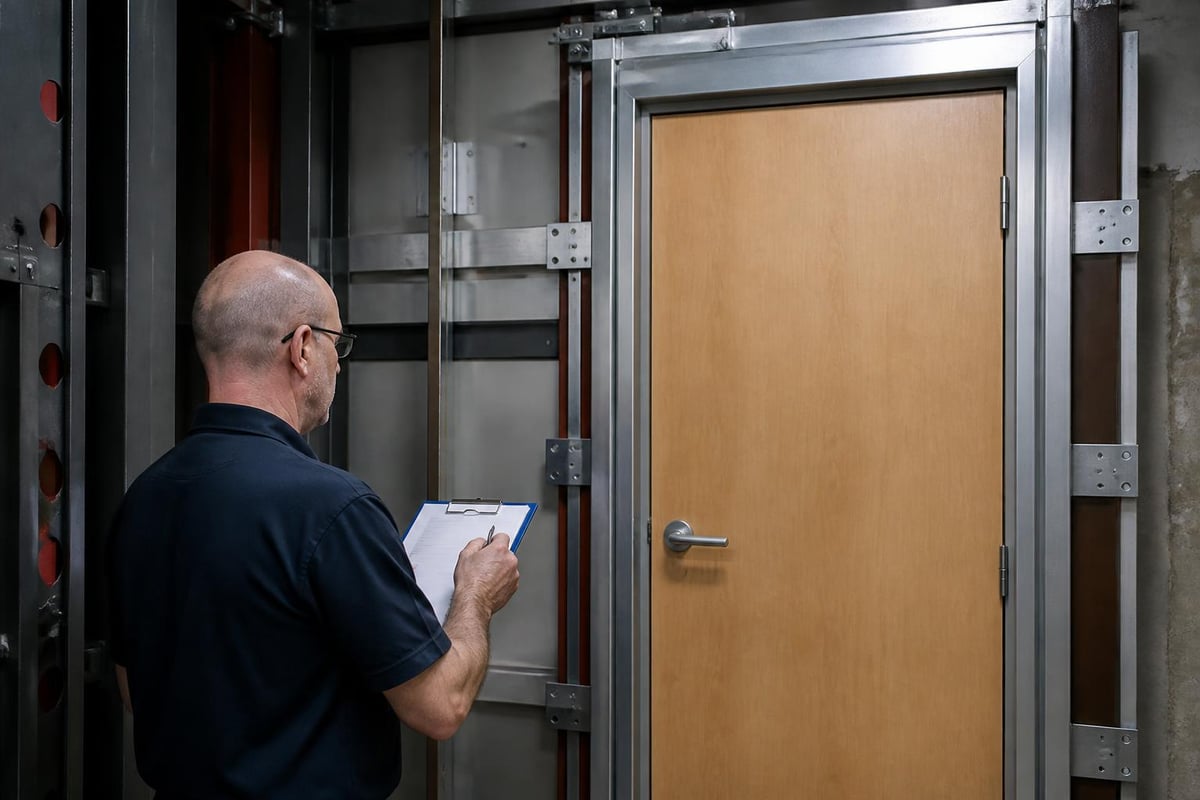
Fire resistance testing subjects complete door assemblies to furnace conditions following standardised temperature curves. Doors must withstand fire exposure for their rated duration whilst maintaining integrity (no penetration of flames or hot gases) and insulation (limiting temperature rise on the unexposed face). Additionally, FD30S and FD60S rated doors must demonstrate adequate smoke containment.
However, testing occurs under laboratory conditions that may not perfectly replicate real-world installations. This is why fire regulations fire doors compliance requires not just certificated products but also correct installation, appropriate maintenance, and user discipline. A door that achieves 60 minutes fire resistance in testing may fail within minutes if improperly installed, poorly maintained, or wedged open.
Specific Regulatory Considerations for Different Building Types
Different building categories face distinct regulatory requirements reflecting their specific risk profiles and occupancy characteristics. Understanding these variations helps responsible persons implement proportionate fire safety measures.
Commercial and Industrial Premises
Offices, warehouses, and manufacturing facilities must comply with the Regulatory Reform (Fire Safety) Order 2005, with fire door requirements typically specified based on building size, occupancy levels, and fire risk assessment findings. Multi-storey commercial buildings generally require higher-rated doors protecting stairwells and corridors, whilst single-storey industrial units may focus on compartmentation between different occupancy areas.
Fire safety compliance services help commercial premises navigate complex regulatory requirements, particularly where buildings contain mixed uses or have undergone modifications since original construction. Professional assessment ensures door specifications remain appropriate as building use evolves.
Residential Buildings
Houses in multiple occupation (HMOs) and purpose-built flats face particularly stringent requirements following increased regulatory scrutiny after high-profile incidents. The Fire Safety Act 2021 extended the Regulatory Reform (Fire Safety) Order to cover flat entrance doors and external wall systems, whilst the Building Safety Act 2022 introduced additional requirements for higher-risk residential buildings.
Flat entrance doors typically require FD30S rating as minimum, providing 30 minutes fire resistance with smoke control. Doors opening onto common corridors or lobbies must include self-closing devices, ensuring they remain closed during fire emergencies. Fire regulations fire doors in residential settings must address both protecting escape routes and containing fire within flats of origin, buying critical time for evacuation and fire service intervention.
Healthcare and Educational Facilities
Hospitals, care homes, and schools present unique challenges due to occupant characteristics. Progressive horizontal evacuation strategies common in healthcare settings rely heavily on fire door integrity to create safe refuges during staged evacuation. Similarly, schools must balance life safety requirements with safeguarding concerns and day-to-day operational needs.
These settings often employ electromagnetic hold-open devices extensively, keeping doors open during normal use whilst ensuring automatic closure upon fire alarm activation. Such systems require integration between fire alarm systems and door hardware, demanding specialist expertise during specification and installation phases.
Integrating Fire Doors Within Broader Fire Strategy
Fire doors do not function in isolation but as part of comprehensive fire protection strategies. Understanding how they integrate with other passive and active fire safety measures helps responsible persons optimise building safety whilst managing compliance obligations efficiently.
Compartmentation and Fire Door Placement
Compartmentation divides buildings into discrete fire-resisting sections, limiting fire spread and creating defendable spaces. Fire doors protect openings within compartment walls and floors, maintaining the integrity that solid construction provides. The effectiveness of compartmentation depends entirely on fire doors performing correctly, as any breach creates pathways for fire and smoke propagation.
Strategic door placement follows building layout and occupancy patterns. Doors protecting stairwells and corridors-primary escape routes-require particular attention, as their failure directly threatens evacuation capability. Similarly, doors separating different occupancies or high-risk areas from general spaces play critical roles in containing fire at source.
Interaction With Active Fire Protection
Active systems including sprinklers, fire alarms, and smoke ventilation work alongside passive measures like fire doors. Well-designed buildings coordinate these elements to maximise protection. For example, smoke detectors positioned appropriately relative to fire doors can provide early warning before corridor conditions become untenable, whilst electromagnetic hold-open devices integrate alarm and door closure functions seamlessly.
However, this integration requires ongoing maintenance of all systems. A fire door in perfect condition provides limited protection if the fire alarm system fails to activate hold-open releases or if smoke ventilation systems cannot operate due to poor maintenance. Responsible persons must consider fire safety holistically, ensuring all elements receive appropriate attention as detailed in guidance from organisations like the Steel Door Institute.
Future Regulatory Developments and Emerging Standards
Fire safety regulation continues evolving in response to emerging risks, technological developments, and lessons learned from incidents. Staying informed about regulatory trajectory helps organisations prepare for future compliance obligations and avoid costly retrofitting when requirements change.
Building Safety Act Implementation
The Building Safety Act 2022 fundamentally reformed building safety regulation for higher-risk buildings. While primarily focused on high-rise residential buildings, its principles influence broader fire safety approaches. The Act emphasises greater accountability, more rigorous record-keeping, and enhanced resident engagement-themes likely to permeate fire safety regulation across all building types.
For fire doors specifically, the Act reinforces the importance of maintaining comprehensive documentation throughout building lifecycles. Golden thread information requirements mean organisations must track door specifications, installation details, inspection histories, and maintenance interventions with unprecedented rigour. Fire regulations fire doors must satisfy are increasingly focused on demonstrable compliance rather than assumed adequacy.
Smart Building Technologies
Emerging technologies offer opportunities to enhance fire door monitoring and management. Wireless sensors can detect when doors are wedged open, monitor closer operation, and track usage patterns. Integration with building management systems enables real-time compliance monitoring, automated inspection scheduling, and predictive maintenance.
However, technology adoption must not outpace regulatory recognition. Responsible persons should ensure that smart monitoring supplements rather than replaces physical inspections, as regulatory requirements continue emphasising direct verification by competent persons. The balance between innovation and proven practice will shape fire safety approaches in coming years.
Training and Competency Requirements
Effective fire door compliance depends on competent individuals throughout the building lifecycle-from initial specification and installation through to ongoing maintenance and inspection. Understanding competency requirements helps organisations ensure personnel possess appropriate knowledge and skills.
Roles and Responsibilities
Different individuals require different competency levels depending on their roles:
| Role |
Required Competency |
Typical Evidence |
| Responsible person |
Understanding of fire safety duties, ability to commission competent specialists |
Fire safety training completion, professional development activities |
| Fire door installers |
Detailed knowledge of installation standards, manufacturer instructions, certification requirements |
BM TRADA Q-Mark installer scheme, manufacturer training certificates |
| Inspectors |
Ability to identify defects, assess risk significance, produce compliant reports |
Accredited fire door inspection training, industry recognised qualifications |
| Maintenance staff |
Understanding of basic fire door function, ability to perform routine checks |
In-house training programmes, competency assessments |
Third-party accreditation schemes provide assurance of competency levels. For installers, schemes like the BM TRADA Q-Mark installer certification demonstrate systematic training and ongoing assessment. For inspectors, qualifications from organisations such as the Fire Industry Association or Institution of Fire Engineers indicate recognised expertise.
Building managers should verify competency credentials before engaging contractors or assigning internal staff to fire door responsibilities. This due diligence demonstrates reasonable steps to ensure compliance, which can prove crucial if regulatory action or legal proceedings arise. Organisations like Firesurv Group Ltd provide comprehensive training programmes ensuring staff understand fire regulations fire doors compliance requirements applicable to their specific roles.
Continuing Professional Development
Fire safety knowledge requirements evolve as regulations change, new products emerge, and industry guidance develops. Regular training updates ensure individuals maintain current understanding. Professional bodies typically require members to undertake continuing professional development, ensuring knowledge remains fresh and relevant.
For organisations managing multiple buildings, developing internal competency frameworks ensures consistent standards across sites. This might include standardised inspection checklists, regular refresher training, and knowledge-sharing forums where staff discuss challenging scenarios and emerging issues. Investing in competency development reduces compliance risks whilst improving overall fire safety culture.
Understanding and implementing fire regulations fire doors requirements protects lives, preserves property, and demonstrates legal compliance. From initial specification through installation, inspection, and maintenance, every stage demands attention to detail and commitment to standards. As legislation evolves and enforcement intensifies, organisations must maintain robust compliance systems supported by competent personnel and comprehensive documentation. Firesurv Group Ltd provides expert guidance and professional services across all aspects of fire door compliance, helping businesses throughout the United Kingdom meet their legal obligations whilst maintaining the highest safety standards.