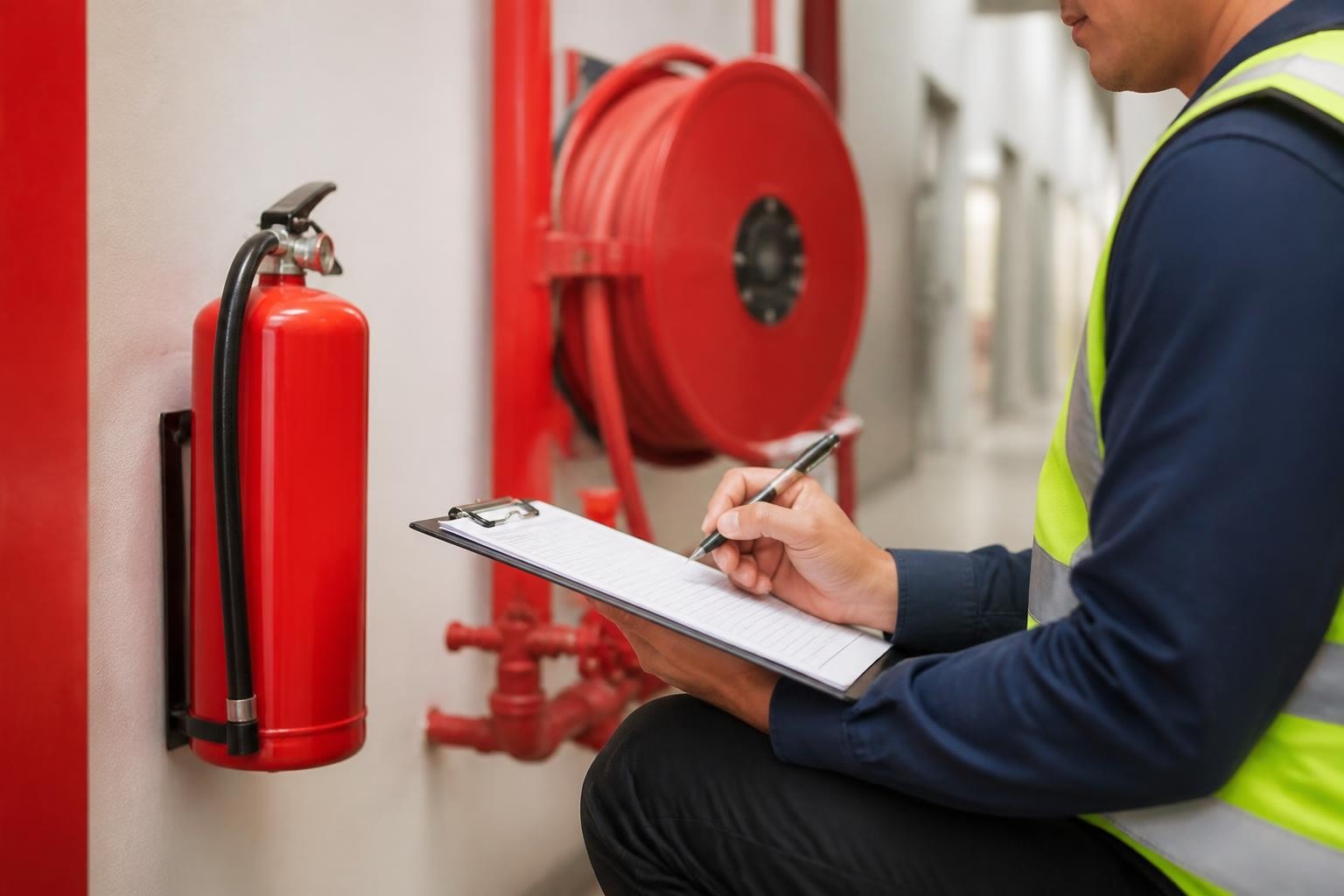
Regular maintenance of fire equipment represents a fundamental pillar of workplace safety and legal compliance across the United Kingdom. From fire extinguishers and alarm systems to emergency lighting and suppression equipment, every component of a building's fire protection infrastructure requires systematic inspection, testing, and servicing to function when needed most. The consequences of neglecting this responsibility extend far beyond potential fines-they can result in catastrophic property damage, serious injuries, or loss of life. For business owners, facilities managers, and responsible persons under the Regulatory Reform (Fire Safety) Order 2005, understanding and implementing robust maintenance protocols is not optional; it's a legal and moral imperative that protects both people and property.
Why Maintenance of Fire Equipment Cannot Be Overlooked
Fire safety equipment exists in a state of readiness, often remaining untouched for months or years until an emergency strikes. This dormant period creates a false sense of security if maintenance is neglected.
Without regular servicing, fire extinguishers can lose pressure, rendering them useless. Alarm systems may develop faults that prevent detection or notification. Emergency lighting batteries degrade over time, potentially leaving evacuation routes in darkness during a power failure.
The consequences of equipment failure include:
- Delayed fire detection allowing flames to spread unchecked
- Inability to suppress fires in their early, manageable stages
- Evacuation complications due to failed emergency lighting or signage
- Legal liability for the responsible person and organisation
- Invalidated insurance coverage resulting in uncompensated losses
- Reputational damage affecting customer confidence and business continuity
British fire safety legislation mandates that employers and building owners ensure all fire safety equipment remains in proper working order. Federal regulations in comparable jurisdictions similarly emphasise the requirement for firefighting equipment to be maintained in a usable and operative condition, with documented inspection schedules.
The maintenance of fire equipment directly impacts fire risk assessment outcomes, as defective or poorly maintained systems increase the overall risk profile of a premises.
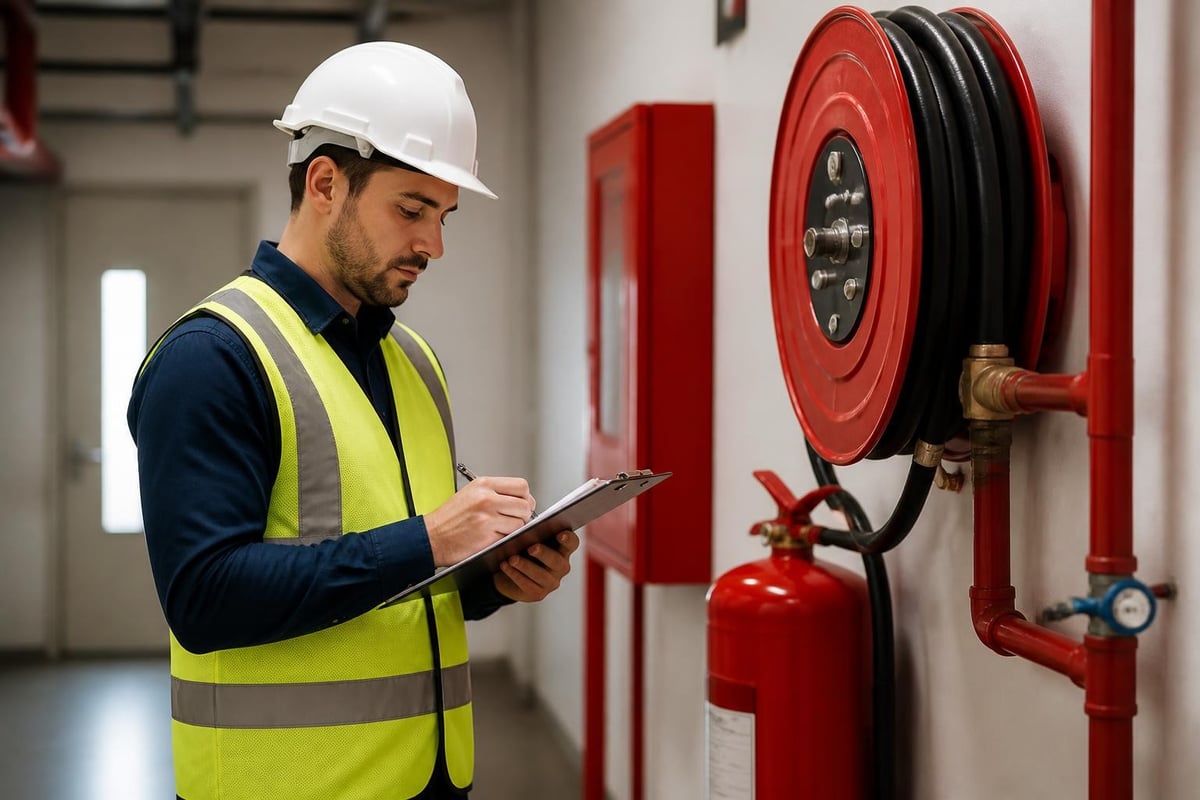
Types of Fire Equipment Requiring Regular Maintenance
Portable Fire Extinguishers
Portable extinguishers represent the first line of defence against small fires. Each extinguisher requires annual servicing by a competent person, with visual inspections conducted more frequently.
During annual maintenance, technicians verify pressure levels, inspect hoses and nozzles for damage, check seals and safety pins, and ensure correct mounting and signage. Extended service at five-year intervals typically includes internal examination and pressure testing.
| Extinguisher Type |
Primary Use |
Annual Check |
Extended Service |
| Water |
Class A fires (paper, wood) |
Pressure, seals, condition |
5 years (internal) |
| Foam |
Class A & B (flammable liquids) |
Pressure, hose, bracket |
5 years (discharge test) |
| CO₂ |
Electrical & Class B |
Weight, horn, mechanism |
10 years (pressure test) |
| Powder |
Multi-class capability |
Pressure, powder condition |
5 years (discharge test) |
Monthly visual checks by designated staff members help identify obvious defects between professional services. Onslow County guidelines provide detailed service intervals that align with industry best practices.
Fire Alarm and Detection Systems
Modern fire alarm systems comprise numerous components including detectors, call points, sounders, and control panels. BS 5839-1 provides the framework for maintenance requirements.
Weekly testing of a different call point ensures the system activates correctly. Monthly checks verify power supplies, batteries, and fault indicators. Comprehensive annual servicing includes testing all detectors, verifying communication between components, and checking backup power systems.
Maintenance tasks include:
- Cleaning detector heads to prevent false alarms from dust accumulation
- Testing battery backup systems under load conditions
- Verifying zoning and cause-and-effect programming
- Updating system logs and maintenance records
- Replacing components approaching end-of-life
Businesses often struggle with interpreting technical alarm logs. Professional fire safety providers can translate this data into actionable compliance reports.
Emergency Lighting Systems
Emergency lighting activates automatically during mains power failure, illuminating escape routes and fire safety equipment locations. These systems require monthly function tests and annual duration tests.
During monthly tests, each luminaire should illuminate when switched to emergency mode. The annual three-hour duration test verifies that batteries maintain adequate charge throughout a prolonged power outage.
Facilities managers must document all tests, noting any luminaires that fail to illuminate, produce insufficient light levels, or don't sustain illumination for the required duration. Failed units require immediate replacement or battery servicing.
Establishing Effective Maintenance Schedules
Creating a structured maintenance programme prevents equipment from being overlooked whilst ensuring compliance with multiple regulatory requirements.
A comprehensive schedule should include:
- Daily visual checks by staff members during opening procedures
- Weekly alarm system tests rotating through different call points
- Monthly emergency lighting function tests with documentation
- Quarterly inspections of extinguisher seals and pressure gauges
- Annual professional servicing of all fire safety equipment
- Extended service intervals for internal examinations and pressure tests
Digital management systems now streamline this process, sending automated reminders and maintaining centralised records accessible during audits or fire authority inspections. Proactive maintenance planning prevents the reactive approach that often results in multiple systems being out of service simultaneously.
Technology solutions from providers like Blowfish Technology can integrate fire safety maintenance tracking into broader facilities management platforms, ensuring nothing falls through administrative gaps.
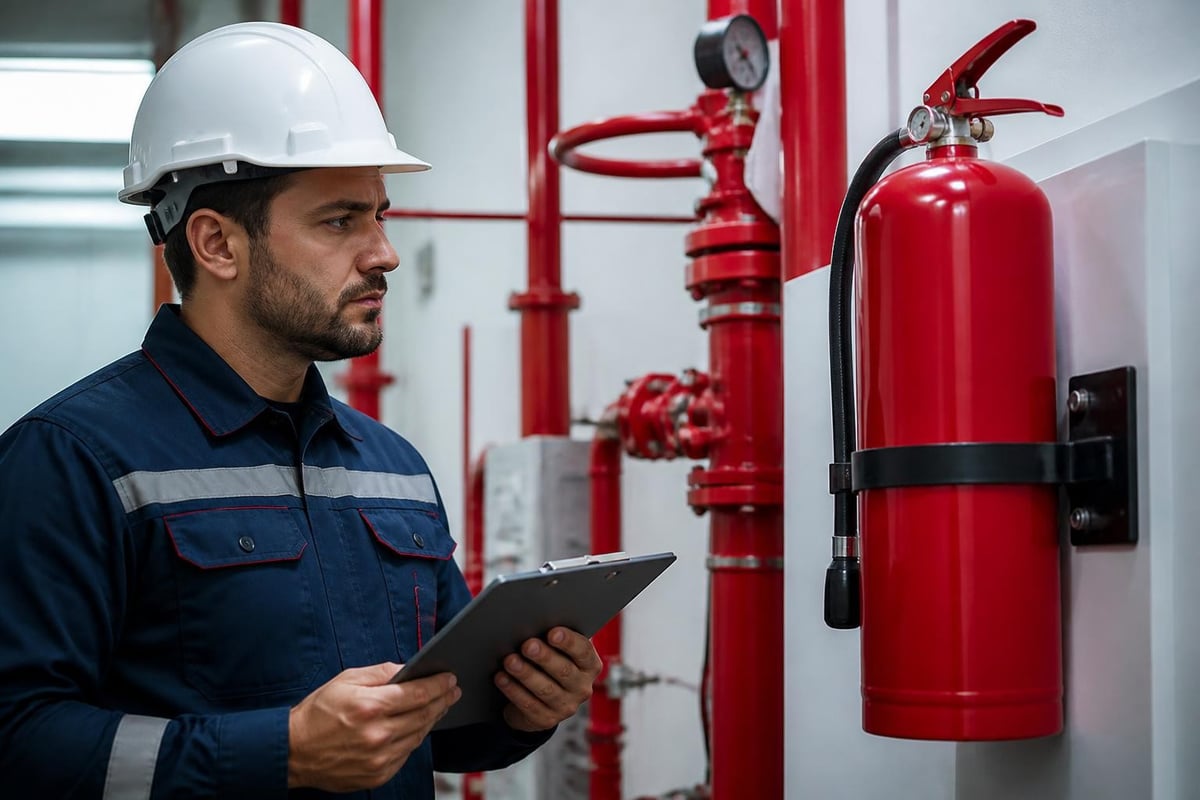
Competency Requirements for Maintenance Personnel
Not all maintenance tasks require specialist qualifications. Simple visual checks and weekly alarm tests can be conducted by designated employees who receive appropriate instruction.
However, annual servicing and certification must be performed by competent persons with relevant qualifications and experience. For fire extinguishers, this typically means BAFE-registered technicians. Alarm systems require engineers with manufacturer-specific training and industry certifications.
Internal Staff Responsibilities
Designated employees should receive training covering:
- How to identify obvious defects or damage
- Correct procedures for weekly alarm testing
- Documentation requirements and record-keeping
- When to escalate issues to professional technicians
- Emergency procedures if equipment fails during testing
This training need not be extensive, but it must be documented and refreshed annually to maintain competency.
Professional Service Providers
When selecting contractors for annual maintenance of fire equipment, verify their credentials thoroughly. BAFE (British Approvals for Fire Equipment) registration provides third-party validation of technical competence and business practices.
Selection criteria should include:
- Relevant industry accreditations (BAFE, FIA, NICEIC)
- Liability insurance adequate for your premises
- References from similar organisations or sectors
- Transparent pricing without hidden charges
- Clear documentation and certification processes
Many organisations benefit from consolidated contracts covering all fire safety equipment rather than managing multiple suppliers. This approach simplifies administration whilst ensuring coordinated maintenance schedules.
Documentation and Record-Keeping Requirements
Maintaining comprehensive records demonstrates due diligence and provides evidence of compliance during regulatory inspections. Administrative codes in various jurisdictions mandate that maintenance records be retained and made available to authorities upon request.
Essential Documentation Elements
Each piece of fire equipment should have an associated maintenance log recording:
- Equipment location and unique identifier
- Installation or commissioning date
- Scheduled maintenance frequency
- Dates of all inspections, tests, and servicing
- Names and qualifications of persons performing work
- Defects identified and remedial actions taken
- Certification following annual servicing
- Parts replaced and warranty information
Fire extinguishers display this information on permanent tags affixed during servicing. For more complex systems like alarms, a dedicated logbook maintained near the control panel serves this purpose.
Digital vs. Paper Records
Whilst traditional paper logbooks remain acceptable, digital systems offer significant advantages for multi-site organisations or buildings with extensive fire safety installations.
Cloud-based platforms provide real-time access to maintenance histories, send automated reminders for upcoming services, and generate compliance reports for stakeholders. They also eliminate the risk of logbooks being misplaced or damaged.
Regardless of format, records should be retained for the operational life of the equipment plus a minimum of two years after replacement.
Common Maintenance Deficiencies and How to Avoid Them
Fire authority inspections frequently identify recurring issues that compromise equipment effectiveness. Understanding these common failings helps organisations implement preventative measures.
| Deficiency |
Consequence |
Prevention Strategy |
| Expired servicing dates |
Non-compliant equipment |
Automated reminder systems |
| Obstructed access |
Delayed emergency response |
Regular housekeeping audits |
| Missing or damaged signage |
Equipment not located quickly |
Include signage in monthly checks |
| Incomplete test records |
Cannot demonstrate compliance |
Standardised documentation templates |
| Defects not remedied |
Equipment failure when needed |
Escalation procedures for repairs |
Obstruction and Access Issues
Fire extinguishers, alarm call points, and emergency lighting must remain readily accessible. However, storage pressures often result in fire safety equipment becoming blocked by furniture, stock, or temporary displays.
Monthly inspections should specifically verify clear access routes and remove any obstructions immediately. Educating staff about the importance of maintaining clear access prevents recurrence.
Failure to Action Identified Defects
Identifying faults during inspections provides no benefit if remedial work isn't completed promptly. Organisations should implement escalation procedures ensuring that defects are categorised by severity and addressed within defined timeframes.
Critical defects affecting life safety equipment should trigger immediate action, including temporary measures such as fire watches until permanent repairs are completed.
Integration with Passive Fire Protection Systems
Active fire safety equipment works in conjunction with passive fire protection elements such as fire doors, compartmentation, and structural protection. Maintenance programmes should consider these systems holistically rather than in isolation.
Fire doors require quarterly inspections to verify that self-closing mechanisms function correctly, seals remain intact, and gaps don't exceed specified tolerances. Compromised fire doors undermine the effectiveness of detection and suppression equipment by allowing smoke and flames to spread beyond intended compartments.
Similarly, penetration seals around pipes and cables must be inspected for damage or degradation that could compromise compartmentation integrity. Professional inspection, installation, and remediation of passive fire protection systems ensures that compartmentation remains effective and evacuation routes stay protected.
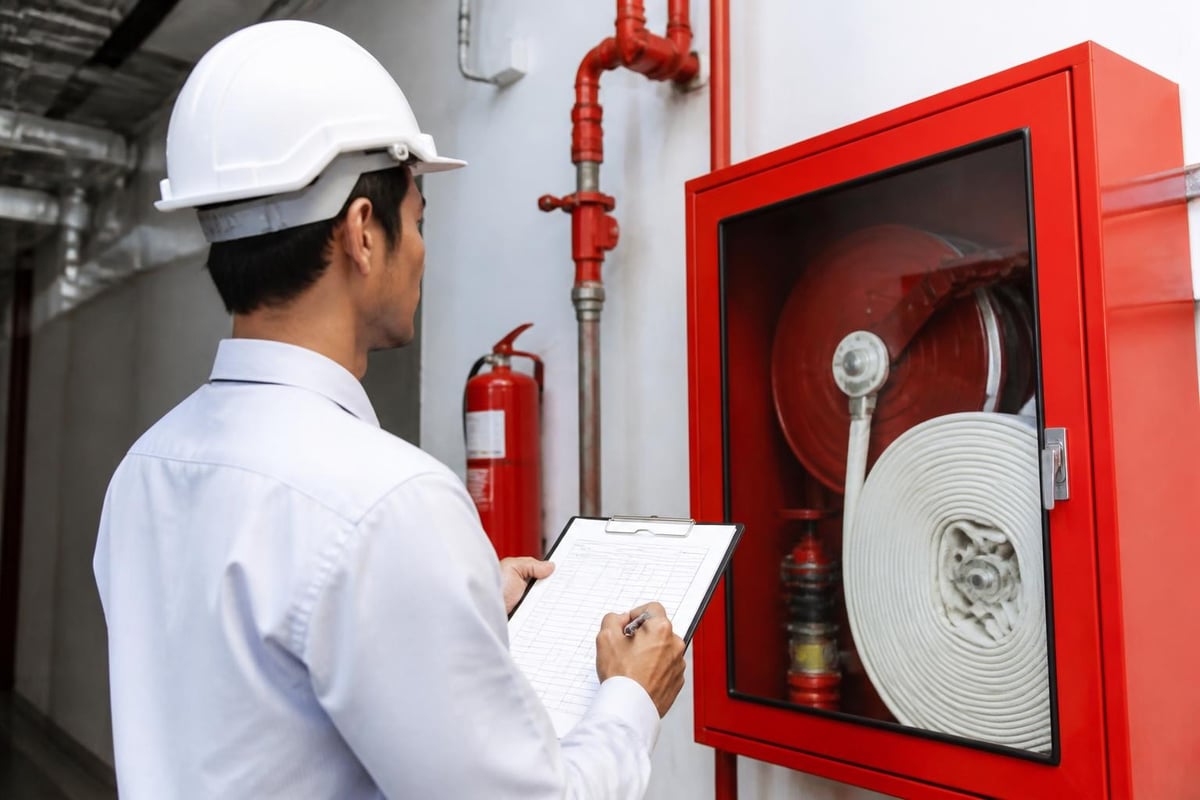
Cost Considerations and Budgeting
Maintenance of fire equipment represents an ongoing operational expense that requires adequate budgeting. However, the cost of compliance pales in comparison to potential losses from fire damage or regulatory penalties.
Typical Annual Costs
Budget expectations vary based on building size, occupancy type, and equipment complexity:
- Fire extinguisher servicing: £15-£25 per unit annually
- Fire alarm system maintenance: £200-£800 annually for small systems
- Emergency lighting testing: £150-£500 annually depending on unit quantity
- Combined service contracts: Often provide 10-15% savings over individual agreements
Extended service intervals involving discharge testing or internal examinations incur additional charges but occur less frequently.
False Economy of Delayed Maintenance
Postponing scheduled maintenance to reduce short-term costs invariably increases long-term expenses. Equipment failures require emergency call-outs at premium rates. Regulatory non-compliance can result in prohibition notices forcing business closure until deficiencies are remedied.
Insurance implications present another financial consideration. Policies typically require evidence of regular equipment maintenance. Claims may be denied or reduced if inadequate maintenance contributed to fire damage or spread.
Regulatory Framework and Enforcement
The Regulatory Reform (Fire Safety) Order 2005 places legal responsibility on the "responsible person" (typically the employer or building owner) to ensure adequate fire safety measures. This explicitly includes maintaining fire safety equipment in efficient working order.
Fire and Rescue Authorities conduct inspections to verify compliance. Inspection protocols similar to those outlined in Michigan regulations require monthly checks of apparatus and equipment with comprehensive record-keeping.
Enforcement actions for non-compliance range from informal notices requiring specified improvements through to prosecution resulting in unlimited fines and potential imprisonment for serious breaches.
Third-Party Certification Benefits
Whilst not legally mandatory for all equipment types, third-party certification schemes provide additional assurance and may offer advantages during regulatory inspections.
BAFE-registered servicing for extinguishers, NICEIC certification for electrical fire systems, and FIA membership for fire industry contractors all demonstrate commitment to professional standards that exceed minimum legal requirements.
Emerging Technologies in Fire Equipment Maintenance
Traditional maintenance approaches rely heavily on manual inspections and time-based servicing intervals. Emerging technologies promise more predictive and efficient alternatives.
Innovations include:
- IoT-connected fire safety equipment providing real-time status monitoring
- Predictive analytics identifying potential failures before they occur
- Automated testing systems reducing manual intervention requirements
- Cloud-based compliance platforms centralising multi-site management
- Augmented reality tools assisting technicians during complex servicing
These technologies don't eliminate the need for competent human oversight but enhance efficiency and reliability. Early adoption provides competitive advantages whilst supporting enhanced compliance demonstration.
Organisations should evaluate whether their current IT infrastructure can support connected fire safety equipment. Specialists like Blowfish Technology can ensure network security and reliability when integrating IoT fire safety devices into broader building management systems.
Maintenance During Building Alterations and Refurbishment
Construction work, refurbishment projects, and occupancy changes create particular challenges for fire equipment maintenance. Dust, vibration, and temporary power arrangements can all affect system functionality.
Project planning should include provisions for:
- Protecting fire safety equipment from construction damage
- Adjusting alarm sensitivity to prevent false activations from dust
- Verifying system functionality before reoccupation
- Updating fire risk assessments to reflect altered conditions
- Recommissioning systems following substantial modifications
Temporary fire safety measures may be necessary during work that renders permanent systems inoperable. These might include additional extinguishers, enhanced fire watches, or temporary alarm systems.
Training and Awareness Programmes
Even the most meticulously maintained fire equipment provides limited benefit if building occupants don't understand its proper use. Comprehensive fire safety training should complement technical maintenance programmes.
Staff training should cover:
- Equipment locations and how to access them quickly
- Appropriate extinguisher selection based on fire classification
- Safe operation procedures including personal safety priorities
- When to fight fires versus immediate evacuation
- Alarm activation and evacuation procedures
Annual refresher training maintains competency whilst incorporating updates to equipment or procedures. Practical demonstrations with training extinguishers build confidence in actual emergency situations.
Detailed guidance on fire safety training programmes helps organisations develop appropriate instruction for their specific circumstances and occupancy types.
Specialist Equipment Considerations
Beyond standard extinguishers and alarm systems, many premises contain specialist fire suppression equipment requiring particular maintenance expertise.
Kitchen Suppression Systems
Commercial kitchens typically feature automatic suppression systems protecting cooking equipment. These systems require quarterly inspections and annual servicing including:
- Verification of detection system sensitivity and coverage
- Inspection of nozzles for grease accumulation
- Testing of manual activation mechanisms
- Checking suppressant levels and cylinder pressure
- Ensuring fusible links haven't been painted or damaged
System activation during actual fires or testing requires professional recharge and reset before returning to service.
Sprinkler and Water Mist Systems
Wet and dry sprinkler systems demand weekly, monthly, and quarterly inspections alongside comprehensive annual testing. Vessel fire equipment regulations provide frameworks for systematic inspection and testing that translate well to building installations.
Maintenance tasks include verifying water supply pressure, testing alarm valves, inspecting sprinkler heads for damage or painting, and flow testing to ensure adequate water delivery.
The Role of Planned Preventative Maintenance
Reactive maintenance approaches address equipment failures after they occur. Planned preventative maintenance (PPM) schedules systematic inspections and servicing before failures happen.
PPM for fire safety equipment reduces overall costs through:
- Early identification of developing issues requiring minor repairs
- Scheduled servicing during convenient times rather than emergency call-outs
- Extended equipment lifespan through proper care
- Reduced risk of multiple simultaneous failures
- Enhanced compliance demonstration during inspections
Apparatus maintenance best practices emphasise proactive approaches that ensure reliability when equipment is needed most. These principles apply equally to building fire safety systems.
Multi-Site Maintenance Coordination
Organisations operating multiple premises face additional complexity coordinating maintenance of fire equipment across dispersed locations. Centralised contract management and standardised procedures help maintain consistency.
Benefits of coordinated multi-site programmes include:
- Negotiated pricing through consolidated service contracts
- Consistent service standards across all locations
- Centralised compliance reporting for senior management
- Shared best practices between sites
- Simplified audit preparation and regulatory inspections
Cloud-based maintenance tracking platforms enable facilities managers to monitor compliance status across entire property portfolios from a single dashboard, identifying locations requiring attention before regulatory issues arise.
Environmental and Sustainability Considerations
The maintenance of fire equipment increasingly incorporates environmental considerations. Older extinguishers may contain halon or other substances now recognised as environmentally harmful. Replacement with modern alternatives during maintenance cycles supports sustainability objectives.
LED emergency lighting reduces energy consumption compared to traditional fluorescent fittings whilst providing longer service life and improved reliability. Upgrading during refurbishment projects combines maintenance planning with environmental improvement.
Proper disposal of expired extinguishers, spent batteries, and replaced components ensures compliance with waste regulations whilst supporting corporate environmental responsibility commitments.
Coordination with other building systems offers efficiency opportunities. Modern heating and plumbing specialists can integrate fire safety considerations into broader mechanical system maintenance, ensuring sprinkler supplies remain reliable whilst optimising overall building performance.
Effective maintenance of fire equipment combines systematic inspection schedules, competent servicing, comprehensive documentation, and integration with broader fire safety strategies. By implementing robust maintenance programmes, organisations protect occupants, preserve property, and demonstrate regulatory compliance whilst avoiding the severe consequences of equipment failure during emergencies. Firesurv Group Ltd provides comprehensive fire safety services across the United Kingdom, supporting businesses with expert assessments, professional installations, and ongoing maintenance to ensure complete compliance with fire safety legislation.